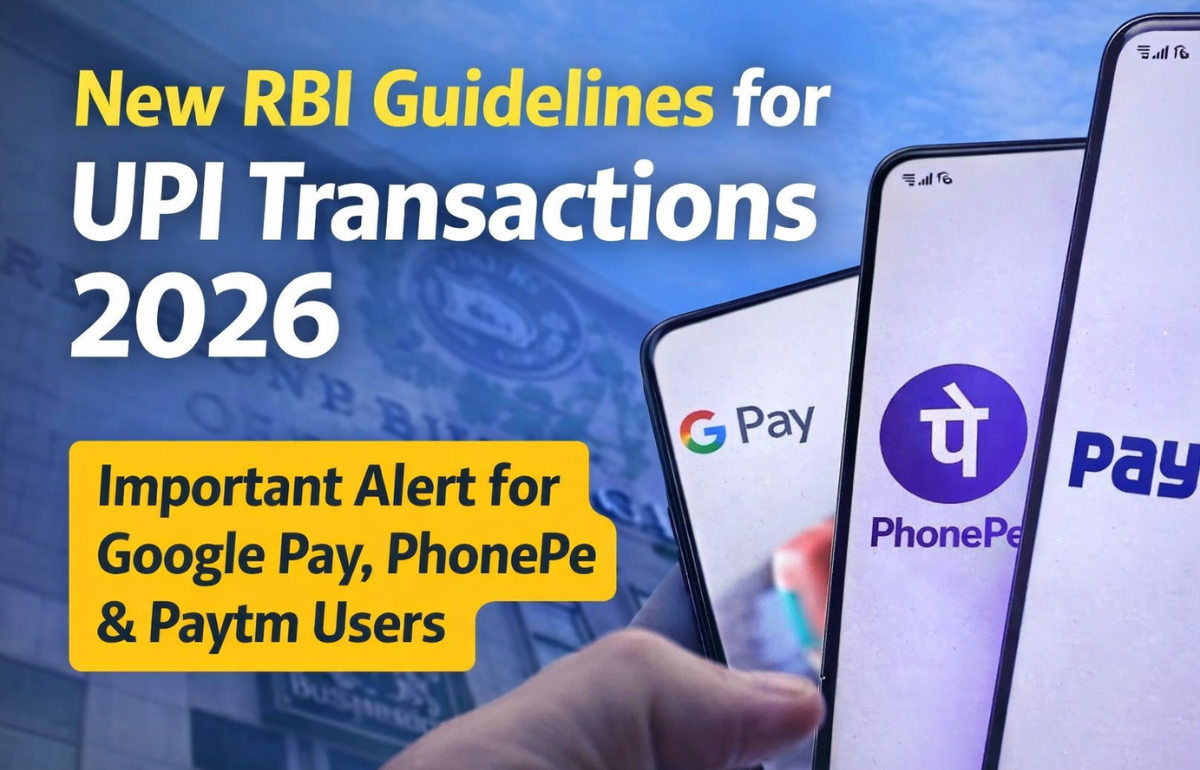
New RBI Guidelines for UPI Transactions 2026: Big Update for Google Pay, PhonePe & Paytm Users
India’s digital payment system is changing again.
The Reserve Bank of India (RBI) has introduced new guidelines for Unified Payments Interface (UPI) transactions to strengthen security and reduce fraud cases.
If you use Google Pay, PhonePe, or Paytm, this update is important for you.
Let’s understand what has changed and how it may affect you.
Why RBI Updated UPI Rules
UPI transactions in India have crossed billions per month. Along with this growth, online frauds and phishing scams have also increased.
RBI’s new guidelines focus on:
- Preventing unauthorized transactions
- Protecting users from digital fraud
- Strengthening verification for high-value transfers
- Improving complaint resolution
This is mainly a safety-focused update.
Key Changes in New RBI UPI Guidelines
Extra Security for High-Value Transactions
Banks may now apply additional verification steps for large transfers.
For example:
- If you send ₹1,00,000 in one transaction, your bank may ask for extra authentication.
- You may receive additional OTP confirmation.
- Biometric approval may be required.
This reduces the risk of large fraud losses.
Monitoring of Suspicious Activity
Banks and payment apps are required to:
- Track unusual transaction patterns
- Flag abnormal payment behavior
- Temporarily restrict risky accounts
If your account shows sudden unusual activity, your bank may contact you for confirmation.
Stricter KYC Compliance
Incomplete KYC may now lead to:
- Temporary UPI restrictions
- Lower transaction limits
Users should ensure their KYC is fully updated with their bank.
Faster Fraud Reporting System
RBI has strengthened fraud complaint handling.
If you face unauthorized UPI deduction:
- Inform your bank immediately
- Register complaint in UPI app
- Call bank helpline
Quick reporting improves fund recovery chances.
Who Will Be Affected?
- Users sending large amounts frequently
- New UPI users
- Accounts with incomplete KYC
- Users involved in suspicious transaction patterns
Normal small daily payments are unlikely to be affected.
Is UPI Still Safe?
Yes.
UPI remains one of the safest digital payment systems globally. The new RBI guidelines are preventive measures, not restrictions.
Most users will continue using UPI normally without major changes.
What You Should Do Now
- Never share OTP
- Avoid unknown payment requests
- Double-check receiver name before paying
- Enable app lock
- Update KYC if pending
Digital awareness is the best protection.
Frequently Asked Questions (FAQ)
Q1. Has RBI reduced UPI transaction limits?
No general limit reduction has been announced. However, banks may apply specific limits for security reasons.
Q2. Can UPI transactions be reversed?
If reported immediately, banks may investigate and attempt recovery.
Q3. Will small daily payments be affected?
Small transactions are unlikely to be impacted.
Q4. Is KYC mandatory for UPI?
Yes. Proper KYC is required to use full UPI services.
Final Thoughts
The new RBI guidelines for UPI transactions are designed to improve safety, not create inconvenience.
Users are advised to stay updated through:
- Official RBI announcements
- Their bank’s official website
- In-app notifications
Digital payments are convenient — but staying informed keeps your money secure.